

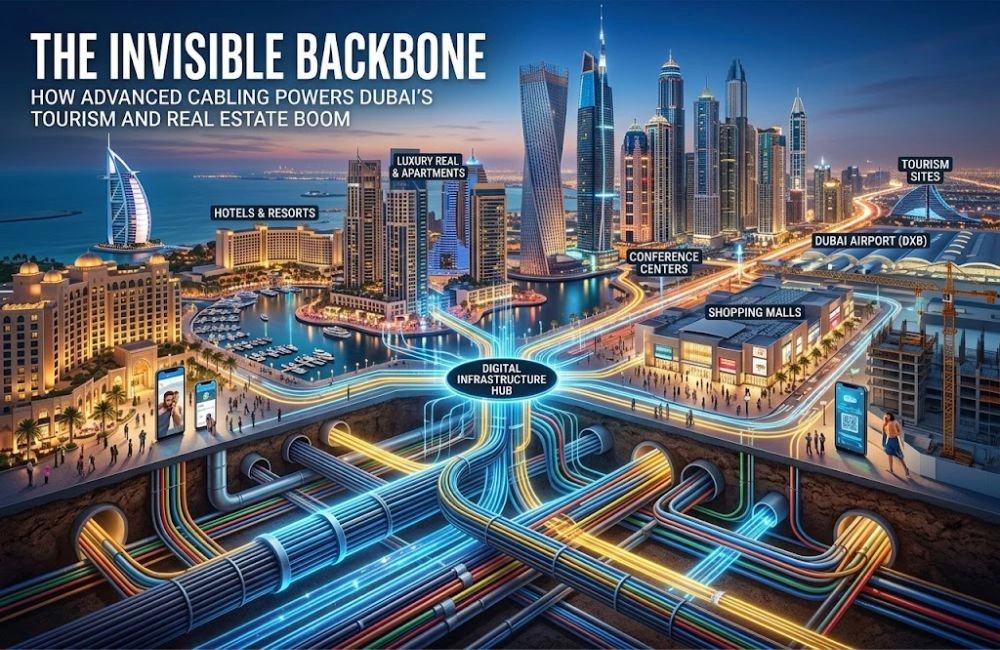
Dubai is a city synonymous with the extraordinary. From the towering heights of the Burj Khalifa to the sprawling luxury resorts on the Palm Jumeirah, the emirate consistently redefines what is possible in architecture and urban planning. Tourists marvel at the choreographed fountains, the perfectly climate-controlled malls, and the seamless transportation systems. However, the true marvel of Dubai lies just beneath the surface.
The glittering skyline, the booming real estate sector, and the flawless tourist experiences are all supported by a complex, highly engineered, and entirely invisible electrical infrastructure. As Dubai continues to expand its offerings—building smarter residential communities and massive entertainment districts—the demand for reliable, high-capacity power distribution has never been more critical.
1. Powering the Hospitality Experience
When a tourist checks into a luxury 5-star hotel in Dubai, they expect perfection: instant air conditioning, high-speed Wi-Fi, intelligent room lighting, and non-stop elevator service. Behind the scenes, these mega-resorts consume an astonishing amount of electricity.
Standard commercial wiring is insufficient for these colossal structures. To ensure that a resort can handle peak holiday seasons without a flicker of power loss, developers rely on advanced distribution networks. The electricity traveling from the city’s main grid is stepped down and distributed throughout these massive hotel complexes using specialized medium voltage networks. Partnering with a leading Medium Voltage Cable Manufacturer ensures that these resorts are equipped with cables capable of handling heavy, continuous loads while resisting the thermal stress of the UAE’s intense summer heat. This robust infrastructure guarantees the uninterrupted luxury experience that Dubai’s tourism sector is famous for.
2. The Lifeline of Smart Real Estate
Dubai is rapidly transitioning from building standard housing to developing fully integrated “Smart Communities” like Dubai Hills Estate and futuristic districts like District 2020. These modern residential developments are heavily reliant on automation.
In these smart homes, everything from security systems and automated blinds to centralized district cooling requires a highly stable power supply. Furthermore, as the city pushes toward sustainability, many new villas and commercial buildings are integrating solar panels on their roofs.
The internal wiring of these modern developments must be flawless. Developers consistently turn to trusted cable suppliers in uae to provide premium low-voltage and specialized data cables. This high-quality wiring ensures that the smart sensors communicate without electromagnetic interference and that the power grid can efficiently handle the variable input of localized solar energy.
3. Keeping the City Moving: Transportation Networks
A world-class tourist destination requires world-class transportation. The Dubai Metro is recognized as one of the most advanced, driverless rail networks globally. Extending over 89 kilometers and serving millions of passengers annually, the system operates with pinpoint precision.
The power demands of a high-speed rail network are immense and highly fluctuating. The trains require massive surges of direct current to accelerate, while the stations need continuous power for escalators, automated ticketing, and climate control. The underground tunnels and elevated tracks are laced with heavy-duty, fire-resistant, and vibration-damped cables designed specifically for the extreme mechanical stress of a transit system. If this hidden network were to fail, the city would come to a standstill.
4. Safety Above All: Fire Survival
In densely populated skyscrapers and expansive malls, safety is the ultimate priority. Dubai has some of the strictest fire and life safety codes in the world.
Standard plastic cables can release toxic smoke when burned, which is a major hazard in a high-rise evacuation. Consequently, all modern developments in the emirate mandate the use of Low Smoke Zero Halogen (LSZH) cables. More importantly, critical life-safety systems—such as smoke extraction fans, emergency lighting, and firefighter elevators—are wired with specialized fire-survival cables. These cables are engineered to continue carrying electricity for hours even when actively engulfed in flames, ensuring that evacuations can proceed safely.
Conclusion: The Unseen Foundation of a Global Hub
While investors focus on the views and tourists focus on the attractions, it is the quality of the unseen electrical infrastructure that dictates the success of Dubai’s developments. By investing in top-tier medium voltage solutions, resilient smart wiring, and uncompromised fire safety, the emirate ensures that its real estate remains highly valued and its tourism sector remains world-leading. The next time you admire Dubai’s skyline at night, remember the thousands of kilometers of advanced cabling working silently to keep the city shining bright.
Your Dubai Infrastructure Questions Answered (FAQs)
Why does a hotel need “Medium Voltage” cables?
Large resorts consume as much power as a small town. Bringing power in at low voltage would require massively thick, impractical wires. Instead, power is brought into the complex at a medium voltage (typically 11kV to 33kV) and then stepped down by local transformers closer to where it is needed within the resort.
How does the intense heat in Dubai affect the city’s power cables?
Extreme heat can cause standard plastic insulation to degrade or melt, leading to short circuits. To combat this, infrastructure in Dubai uses cables insulated with XLPE (Cross-Linked Polyethylene), a highly advanced material that remains stable and safe even at extremely high operating temperatures.
What is the difference between standard cables and those used in the Dubai Metro?
Cables used in rail networks must withstand constant vibration, extreme mechanical stress, and potential exposure to oils and moisture in tunnels. They are also heavily shielded to prevent electrical interference with the train’s automated signaling and braking systems.
Why are fire codes so strict for cables in Dubai skyscrapers?
Evacuating a skyscraper takes significant time. If cables burn and produce toxic, blinding smoke, it makes evacuation nearly impossible. Dubai mandates LSZH (Low Smoke Zero Halogen) cables to ensure visibility and breathable air in escape routes during a fire emergency.
Can solar panels on a Dubai villa use standard household wiring?
No. The power coming directly from a solar panel is Direct Current (DC) and requires specialized solar cables that are highly resistant to UV radiation and intense rooftop heat. Once the power goes through an inverter, it becomes Alternating Current (AC) and can then integrate with the standard household wiring.
