

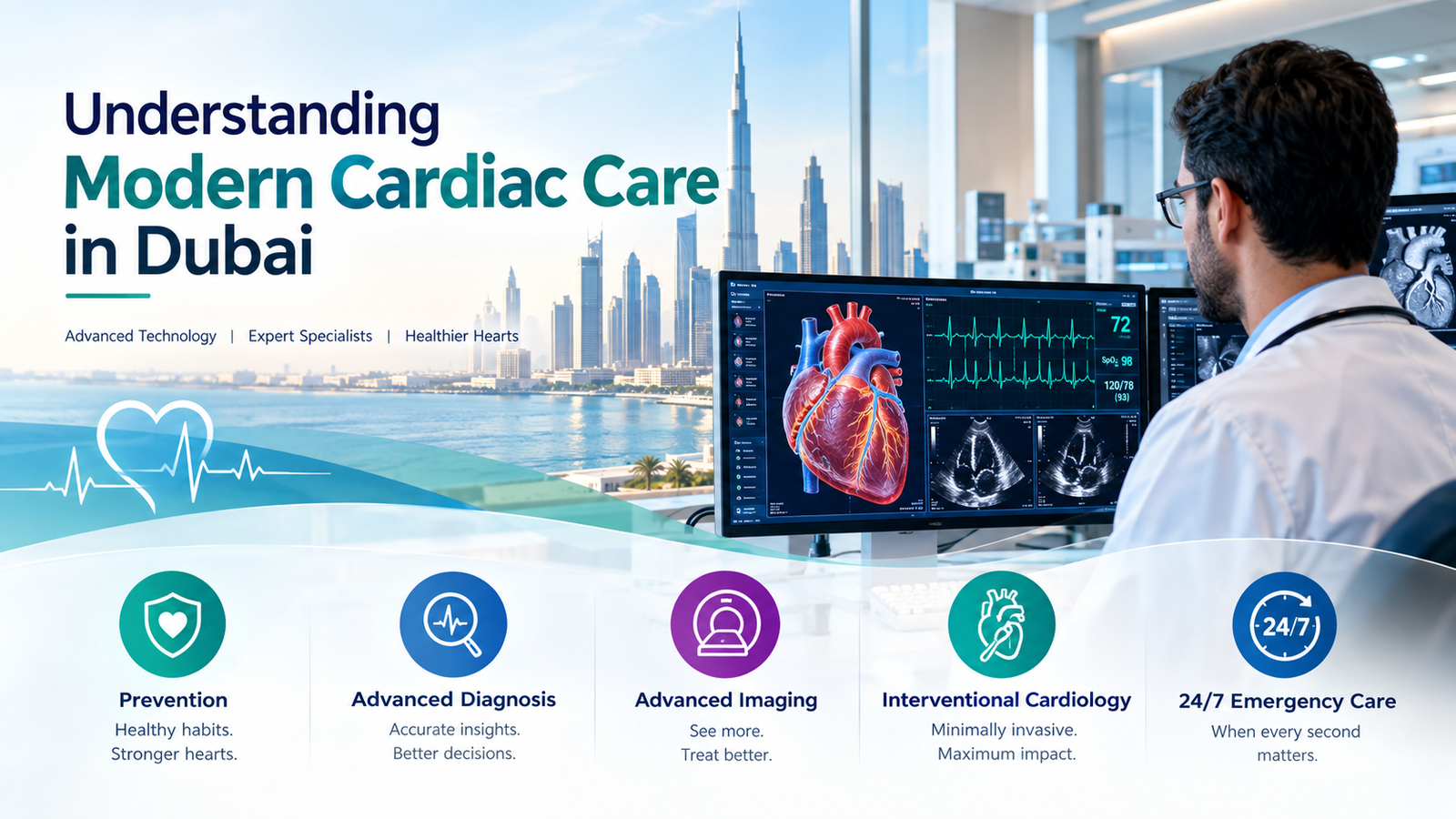
Heart health can be affected by several conditions, from high blood pressure and coronary artery disease to problems involving the heart valves, rhythm or pumping function. Some conditions develop gradually, while others may require immediate medical attention.
Cardiology has therefore become a broad field covering prevention, diagnosis, treatment and long-term monitoring. Patients may need different specialists or treatment approaches at different stages of their condition. Access to appropriate investigations and specialist care can help doctors make treatment decisions based on the patient’s symptoms and clinical findings.
Dubai offers a range of cardiac services, including outpatient consultations, diagnostic testing, emergency cardiac care and interventional procedures. Hospitals with access to multiple specialities can also coordinate cardiac treatment with other areas of medicine when a patient’s health requires wider support.
Recognising and Managing Heart Failure
Heart failure does not mean that the heart has stopped working. It occurs when the heart cannot pump or fill with blood effectively enough to meet the body’s needs. It can develop because of coronary artery disease, previous heart attacks, high blood pressure, valve disease, cardiomyopathy or other conditions.
Common symptoms include breathlessness, tiredness, swelling of the ankles or legs and reduced ability to perform normal activities. Some patients may also experience a persistent cough or notice that they need more pillows to sleep comfortably.
Treatment depends on the type and severity of heart failure and the underlying cause. Medicines may be prescribed to reduce symptoms and support heart function. Lifestyle measures, regular monitoring and management of related conditions are also important.
For patients researching heart failure treatment in Dubai, the availability of cardiology specialists, diagnostic services and ongoing follow-up can be important when choosing where to seek care.
Detecting Heart Disease Before Complications Develop
Cardiac evaluation is not limited to patients who already have a diagnosed heart condition. People with risk factors such as diabetes, high cholesterol, hypertension, obesity, smoking history or a strong family history of cardiovascular disease may also require assessment.
A cardiologist may begin with a detailed medical history and physical examination. Depending on the findings, tests such as ECG, echocardiography, exercise testing or ambulatory monitoring may be recommended.
Echocardiography can provide information about the heart’s structure, valves and pumping ability. Holter or other ambulatory monitors can record heart activity over a longer period and may help detect rhythm disturbances that are not captured during a routine ECG.
Choosing a top heart hospital in Dubai may involve considering the availability of these diagnostic services alongside specialist consultation and treatment facilities.
Treating Coronary Artery Disease
Coronary artery disease develops when the blood vessels supplying the heart become narrowed or blocked, often because of the build-up of fatty deposits. It can cause chest discomfort, particularly during physical activity, although some people may have few or no obvious symptoms.
Treatment may include medicines, changes to diet and physical activity, management of cholesterol and blood pressure, and smoking cessation. When a significant blockage is identified, an interventional procedure may be considered.
Coronary angiography allows doctors to examine the coronary arteries using contrast imaging. If appropriate, angioplasty can be performed to widen the narrowed section, and a stent may be placed to help keep the artery open.
Cardiac Rhythm and Electrophysiology Services
An irregular heartbeat may be harmless in some people but can require treatment in others. Arrhythmias include conditions such as atrial fibrillation, certain forms of tachycardia and slow heart rhythms.
Diagnosis may involve an ECG, extended heart monitoring or specialised electrophysiological testing. Treatment depends on the type of rhythm problem and may involve medicines, cardioversion, catheter-based procedures or an implanted cardiac device.
Patients with recurrent palpitations, unexplained fainting or an unusually fast or slow heartbeat should discuss these symptoms with a doctor rather than trying to identify the rhythm problem themselves.
Caring for Heart Valve Conditions
The heart has four valves that help direct blood through its chambers. If a valve becomes narrowed or does not close properly, the heart may need to work harder to maintain normal blood flow.
Some valve problems can be monitored for years, while others eventually require intervention. Treatment depends on the valve involved, the severity of the problem, symptoms and the effect on heart function.
Depending on the clinical situation, options may include medicines, valve repair or replacement, including selected catheter-based procedures. A multidisciplinary cardiac team may be involved when a patient requires more complex treatment.
What to Look for in a Cardiology Centre
Patients comparing cardiac facilities can consider the services available beyond routine consultations.
| Cardiac Service | Why It Matters |
| Cardiac diagnostics | Helps investigate symptoms and identify heart conditions |
| Emergency services | Provides rapid assessment when urgent symptoms occur |
| Interventional cardiology | Supports catheter-based diagnosis and treatment |
| Electrophysiology | Provides specialist assessment of heart rhythm problems |
| Cardiac surgery | Offers surgical options for selected complex conditions |
| Follow-up care | Helps monitor treatment and changes in cardiovascular health |
Conclusion
Cardiology covers much more than emergency treatment. Regular assessment, risk-factor management and timely intervention can all form part of a patient’s cardiac care.
The right treatment varies according to the underlying condition, symptoms and overall health. Patients can discuss their concerns with a cardiologist to understand which investigations may be appropriate and whether medical treatment, an interventional procedure or continued monitoring is required.
