

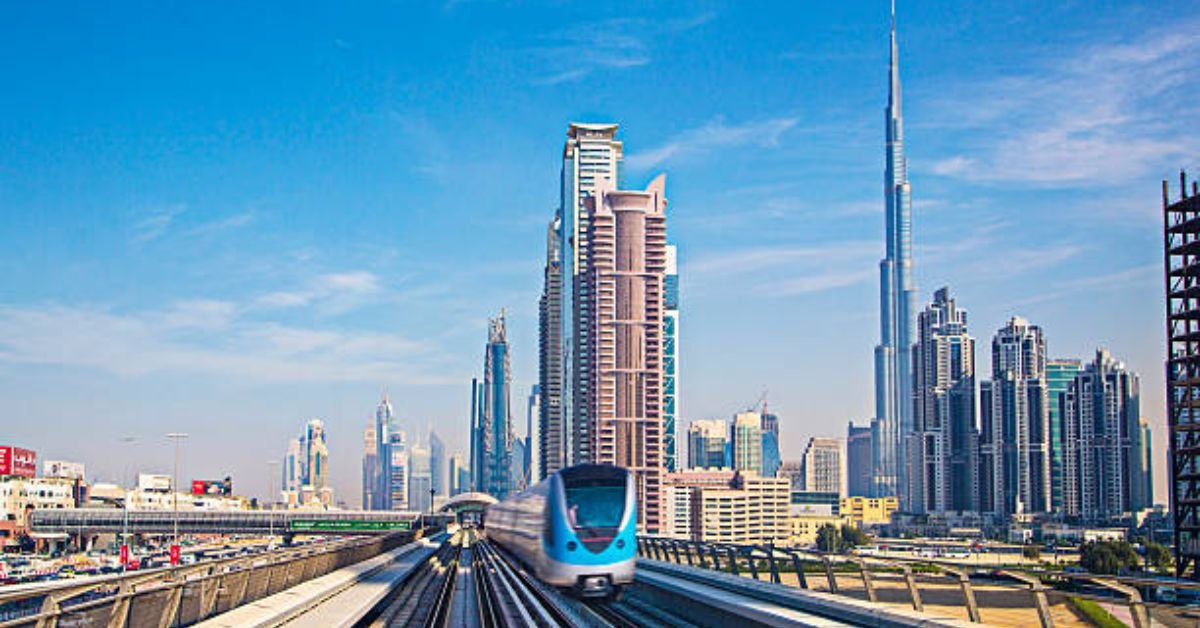
If there’s one thing every first-time visitor to Dubai should master before hopping into a taxi, it’s the Dubai Metro Guide. It is, hands down, the most budget-friendly, air-conditioned, and stress-free way to explore this sprawling city — and in 2026, it’s more efficient than ever.
Unlike taxis or ride-hailing apps, which can rack up costs quickly in Dubai’s traffic-heavy peak hours. The metro runs on a fully automated, driverless system that glides above (and below) the city at regular intervals. Completely bypassing road congestion. A single ride can cost as little as AED 3, compared to a taxi fare that could easily hit AED 40–60 for the same distance.
What makes it a tourist favorite, though, is coverage. The Red Line connects almost every landmark on a visitor’s bucket list:
- Burj Khalifa / Dubai Mall — via the Burj Khalifa/Dubai Mall Metro Station, connected by an air-conditioned walkway
- Dubai Marina & JBR — via Dubai Marina Metro Station, one stop from the beach
“If you need to send a courier or documents during your trip. You can easily find a post office near me close to major Dubai Metro stations like Max or Deria.”
- Mall of the Emirates — home to Ski Dubai
- Dubai International Airport (DXB) — Terminals 1 and 3 are directly linked to the Red Line, making metro-to-hotel transfers incredibly easy
- Old Dubai (Deira, Bur Dubai, Gold Souq) — accessible via the Green Line, ideal for souk-hopping and abra rides across Dubai Creek
With over 55 stations across both lines, clean and modern trains. Free Wi-Fi onboard, and dedicated Gold Class cabins for those wanting extra comfort. The Dubai Metro isn’t just a way to get from A to B — it’s genuinely one of the more enjoyable parts of visiting the city. But to use it smoothly (and avoid an unexpected fine), you need to understand a few essentials first.
How to Buy and Use a Dubai Nol Card
You cannot pay for the Dubai Metro with cash, a bank card, or Apple Pay at the gate. The entire RTA network — metro, buses, trams, and water buses — runs on a single smart card system called the Nol Card (نول, Arabic for “fare”).
Using it is simple:
- Tap in — hold your Nol card against the yellow reader at the station gate before entering the platform.
- Tap out — tap the same card against the reader when exiting at your destination station.
The system calculates your fare automatically based on the number of zones you crossed (Dubai’s metro network is split into 7 fare zones). And deducts it from your card balance the moment you tap out. If you forget to tap out, the maximum possible fare for that zone will be deducted. So always remember the second tap.
Good to know: Your card needs a minimum balance of AED 7.50 to tap in. If your balance is lower, the gate will simply reject you, so keep an eye on it before you travel.
Difference between Silver, Gold, and Red Tickets
Not all Nol cards are the same, and picking the right one saves both money and hassle:
| Card Type | Best For | Card Cost | Initial Balance Included | Key Feature |
|---|---|---|---|---|
| Red Ticket | One-time or occasional riders (1–2 trips) | ~AED 2 | Pay exact fare per trip | Paper-based, valid for 90 days or 10 journeys, whichever comes first; no personal registration needed |
| Silver Card | Most tourists — the standard choice | AED 25 | AED 19 travel credit | Rechargeable, valid for 5 years, works across metro, bus, tram, and water bus |
| Gold Card | Tourists who want extra comfort | AED 25 | AED 19 travel credit | Grants access to Gold Class cabins; fares are double the standard Silver rate for the same journey |
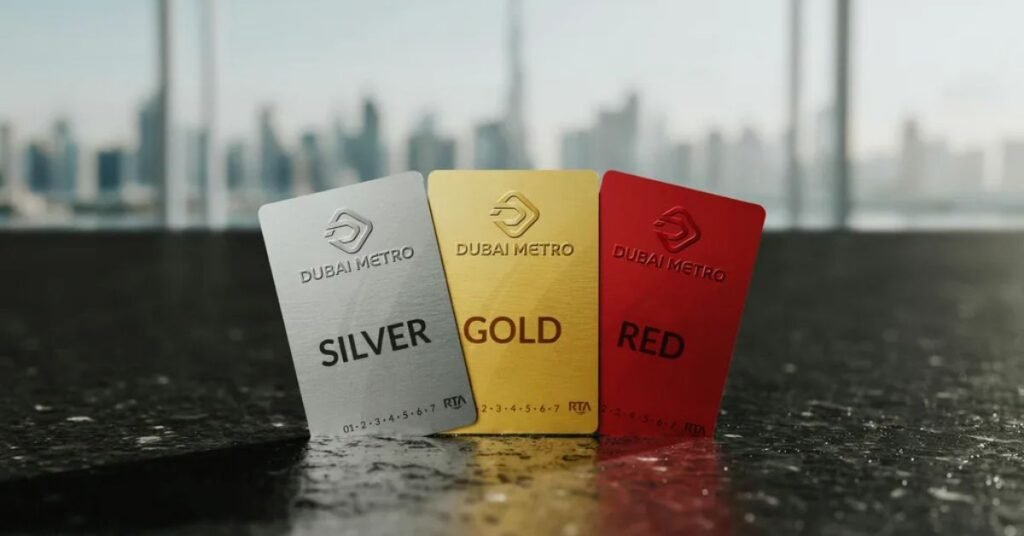
For a short trip or two — say, just visiting Burj Khalifa and heading back to the airport — the Red Ticket is the cheapest option. Since you’re not paying for a reusable card you’ll only use once. But if you’re staying more than a couple of days and plan on hopping around the city regularly (which most tourists do). The Silver Card is by far the better value, since it can also be topped up. And used across buses and the tram network. Only go for the Gold Card if comfort and a quieter. More spacious cabin genuinely matter to you — remember. You’ll pay roughly double the standard fare every single ride.
Where to buy and top up your Nol card
Getting a Nol card in Dubai is refreshingly easy — you don’t need to plan ahead or book online before you land:
- Metro stations: Every station has both a ticket office counter (staffed) and automated vending machines where you can buy a new card or top up an existing one using cash or card.
- Vending machines: These accept AED notes and bank cards, and let you choose your card type. Add balance, and even check your remaining balance instantly. Note that as of 2026, the minimum top-up amount at vending machines is AED 20 (it was previously lower), so keep this in mind when recharging.
- RTA Dubai App / S’hail App: You can top up a registered Nol card digitally through the official RTA app, avoiding queues altogether.
- Online (rta.ae): The RTA website allows balance top-ups for registered cards.
- Select retail outlets: Certain supermarkets and convenience stores across Dubai are also authorized to sell and recharge Nol cards.
Tip for first-timers: Buy your card the moment you land — both Terminal 1 and Terminal 3 metro stations at Dubai International Airport sell Nol cards right at the gates. So you can head straight to your hotel via metro instead of queuing for a taxi.
Dubai Metro Timings & Peak Hours in 2026
Metro timings in Dubai follow the local week structure. Where Friday and Saturday form the weekend (with Sunday being a regular working day). Here’s the official 2026 operating schedule:
| Day | Operating Hours |
|---|---|
| Monday – Thursday | 5:00 AM – 12:00 Midnight |
| Friday | 5:00 AM – 1:00 AM (next day) |
| Saturday | 5:00 AM – 12:00 Midnight |
| Sunday | 8:00 AM – 12:00 Midnight |
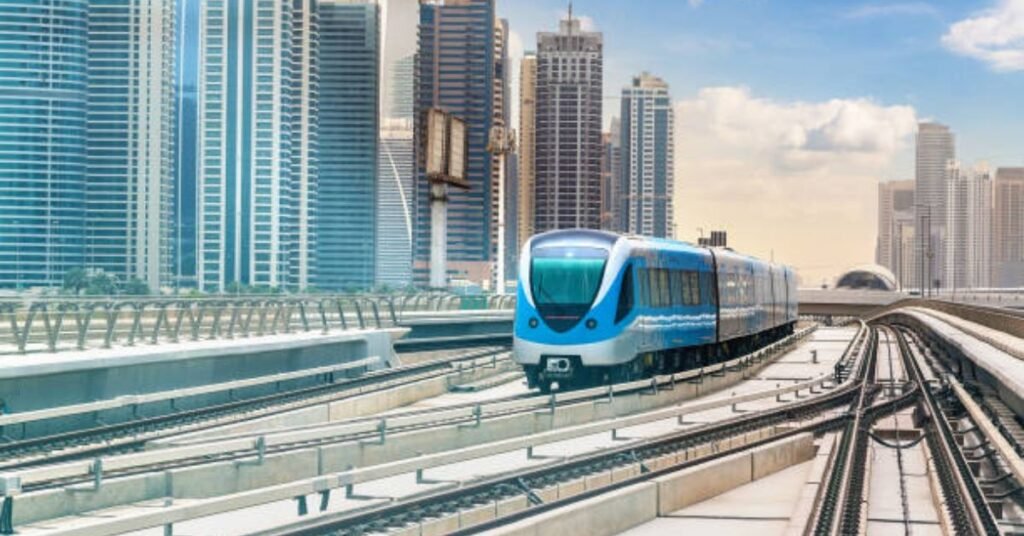
Note that Sunday has a later start time (8 AM instead of 5 AM). Since it’s the first working day of the Dubai week and mornings are quieter. Also keep in mind that these are station closing times. Not last-train times — the very last train on a long route may depart 20–30 minutes before the station officially closes. So don’t cut it too close if you’re relying on a late-night ride back to your hotel.
Peak hours in Dubai fall around:
- 6:00 AM – 8:30 AM (morning office rush)
- 5:00 PM – 7:30 PM (evening office rush)
During these windows, especially on stations like Burj Khalifa/Dubai Mall, Union, and Mall of the Emirates, trains can get extremely packed with commuters, and it can be genuinely uncomfortable if you’re carrying shopping bags or traveling with kids.
Tip to avoid the rush: Plan your big sightseeing trips (Burj Khalifa visits, Dubai Mall, Marina walks) for mid-morning (9:30 AM–4:00 PM) or after 8:00 PM. Not only will the trains be far less crowded, but you’ll also dodge the general city gridlock that spills onto the roads during those same peak windows — a win whether you’re on the metro or in a cab.
Important Dubai Metro Rules & Fines Every Tourist Must Know
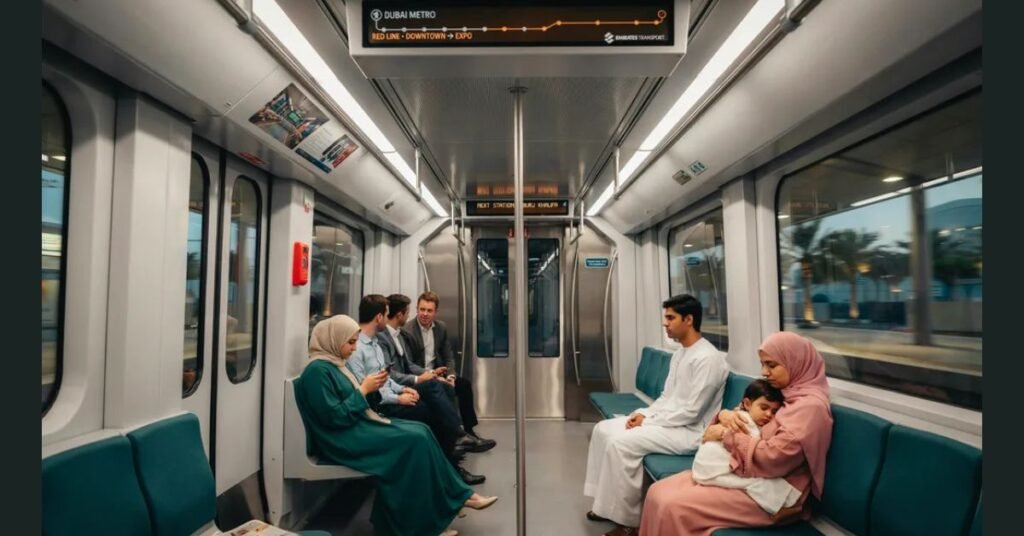
The Dubai Metro is spotless, orderly, and strictly regulated — and the RTA enforces its rules seriously, even on unaware tourists. Fines range from AED 100 for minor violations up to AED 2,000 for serious offenses like tampering with safety equipment. Here are the two mistakes tourists make most often.
No eating and drinking rule
This catches almost every first-time visitor off guard: you cannot eat, drink, or even chew gum anywhere inside the paid zone or onboard the train — and yes, that includes a simple bottle of water. The fine for this is AED 100.
- You’re allowed to finish your snack or drink before you tap into the station (in the free concourse area).
- Smoking, including vapes and e-cigarettes, is banned throughout metro stations and trains, carrying its own AED 200 fine.
- This rule is enforced strictly and inspectors do random checks, particularly since the RTA upgraded its onboard monitoring technology.
Gold Class and Women & Children cabins
Every Dubai Metro train has two clearly marked special sections, and sitting in the wrong one — even by accident — is one of the most common tourist fines:
- Gold Class cabin — usually located at the front of the train, reserved exclusively for passengers holding a Gold Nol card. Sitting here with a Silver or Red ticket results in a fine (typically AED 100), plus you’ll likely be asked to pay the fare difference or move.
- Women & Children cabin — a dedicated section (commonly in the middle of the train) reserved for women, children, and People of Determination. Men traveling alone are not permitted in this cabin, even if it’s not intentional, and doing so carries a fine of around AED 100.
Both cabins are clearly labeled with signage on the platform (painted sections on the floor) and stickers on the train windows — so it’s genuinely easy to avoid this mistake if you glance at the signage before boarding. When in doubt, just head to the standard cabins in the middle-to-rear of the train, which are open to everyone.
Other quick violations to know: sleeping on platforms or trains (AED 300), placing feet on seats or taking up extra seats (AED 100), and traveling with an invalid or shared Nol card (AED 200).
Conclusion & Quick Tips for Beginners
The Dubai Metro genuinely makes exploring this city easier, cheaper, and far less stressful than relying on taxis alone — once you understand the basics, it becomes second nature within a day or two. Before you head out on your first ride, keep these three tips in mind:
- Get a Silver Nol card on arrival — buy it right at the airport metro station, load it with enough balance for your trip, and you’re set for the rest of your stay.
- Travel outside peak hours (6–8:30 AM and 5–7:30 PM) whenever your itinerary allows, for a far more comfortable and photo-friendly ride.
- Check the cabin signage before boarding — no food, no drinks, and always confirm you’re not stepping into the Gold Class or Women & Children section unless it applies to you.
Follow these, and the Dubai Metro will likely become your favorite (and cheapest) way to see the city.
