

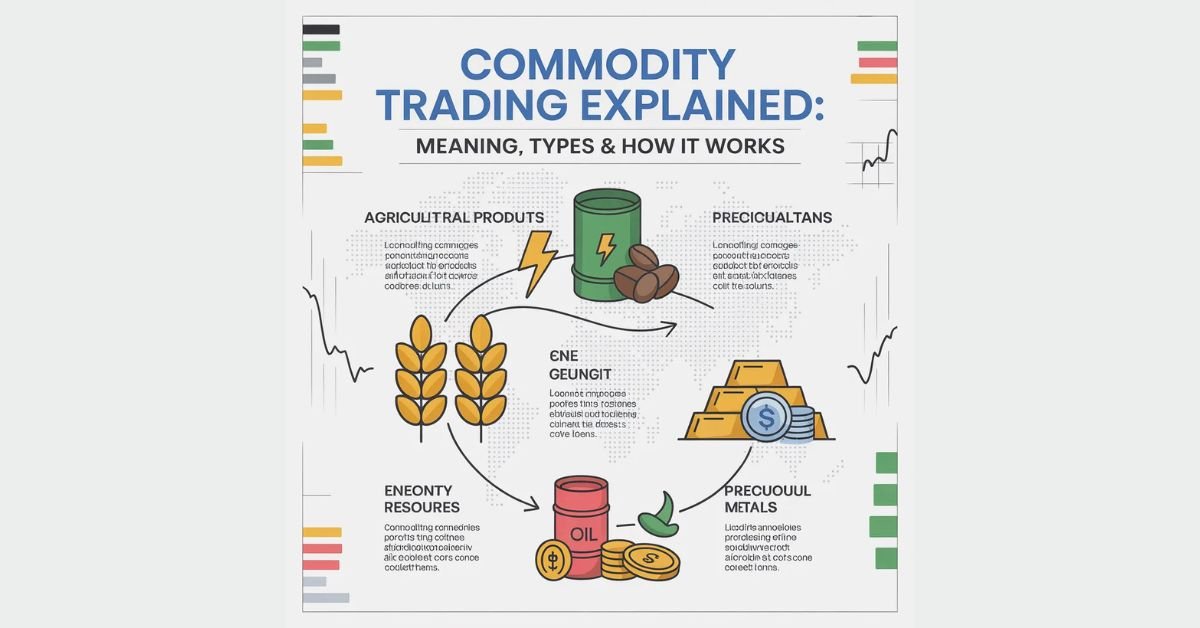
Commodity trading refers to buying and selling raw materials like gold, crude oil, agricultural products, and metals in financial markets.
Unlike stocks, commodities derive value from physical goods and global supply-demand dynamics.
What is Commodity Trading?
In Commodity trading, traders speculate on price movements of physical goods without necessarily taking physical delivery. Instead, most participants trade contracts based on price fluctuations.
These trades occur on exchanges like the Multi Commodity Exchange and other global commodity exchanges.
Types of Commodities
1. Hard Commodities
These are natural resources extracted from the earth:
- Gold
- Silver
- Crude Oil
- Natural Gas
Hard commodities are heavily influenced by geopolitical tensions, production levels, and global economic conditions.
2. Soft Commodities
These are agricultural products grown rather than mined:
- Wheat
- Cotton
- Coffee
- Sugar
Soft commodities are influenced by weather conditions, crop cycles, and global consumption trends.
Ways to Trade Commodities
There are multiple methods to participate in Commodity trading, depending on your risk appetite and capital.
1. Futures Contracts
A futures contract is an agreement to buy or sell a commodity at a predetermined price on a future date. These are standardized contracts traded on regulated exchanges.
2. Spot Trading
Spot trading involves buying commodities at the current market price for immediate settlement.
3. Commodity ETFs
For investors who want exposure without dealing with futures contracts, ETFs provide a convenient alternative. Commodity ETFs track the price of a specific commodity (like gold) or a basket of commodities.
For example, gold-based ETFs track international benchmarks set by institutions such as the London Bullion Market Association.
Using ETFs allows investors to:
- Avoid physical storage concerns
- Gain diversified exposure
- Trade commodities like regular stocks
This makes ETFs particularly attractive for beginners or long-term investors.
How Commodity Trading Works
Commodity prices fluctuate due to several global factors:
- Supply & demand imbalance
- Inflation
- Currency fluctuations
- Central bank policies
- Geopolitical events
For instance, rising inflation often pushes investors toward gold, while oil prices react sharply to production decisions by major exporting nations.
Traders typically rely on:
- Technical analysis
- Inventory data
- Global economic indicators
- Seasonal trends
Benefits of Commodity Trading
- Portfolio diversification
- Hedge against inflation
- High liquidity in major commodities
- Multiple trading methods including futures and ETFs
However, commodities can be highly volatile, especially energy products like crude oil.
Final Thoughts
Commodity trading offers diverse opportunities across metals, energy, and agriculture. Whether you prefer leveraged futures contracts or simplified exposure through ETFs, understanding how commodities function is essential before entering the market.
With proper research, risk management, and a disciplined strategy, commodity markets can become a valuable part of a diversified trading portfolio.
FAQs
1. What is Commodity trading in simple terms?
Commodity trading is the buying and selling of raw materials like gold, oil, wheat, or metals in financial markets to profit from price changes.
2. What are the types of commodities in Commodity trading?
Commodities are divided into hard commodities (gold, oil, metals) and soft commodities (agricultural products like wheat and coffee).
3. How can beginners start Commodity trading?
Beginners can start Commodity trading through futures contracts, spot markets, or commodity-based ETFs, depending on their risk appetite.
4. Are ETFs a safe way to invest in commodities?
ETFs provide diversified exposure without physical ownership. They are generally considered safer than futures for beginners because they don’t involve leverage in the same way.
5. What factors affect prices in Commodity trading?
Prices are influenced by supply and demand, inflation, geopolitical events, currency movements, and global economic trends.
