

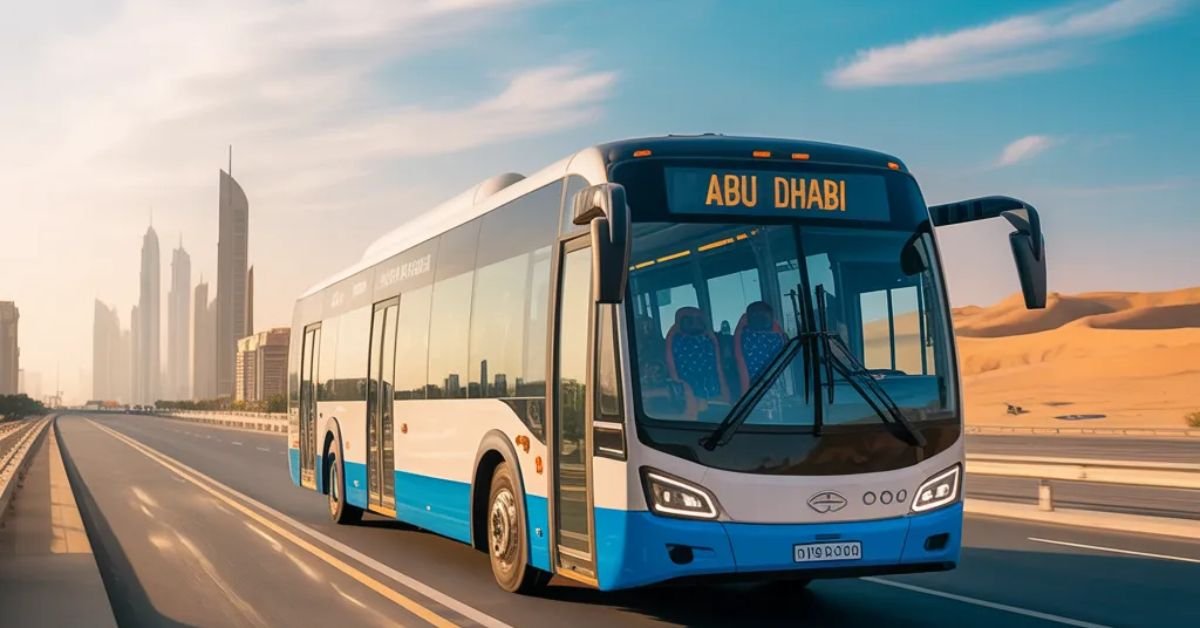
Every morning, before the sun fully rises over Sheikh Zayed Road, thousands of people quietly make a smart choice. They skip the traffic-clogged highways, bypass expensive taxis, and instead walk calmly into an air-conditioned bus bound for Abu Dhabi. What was once considered a secondary travel option has evolved into one of the UAE’s most reliable, affordable, and comfortable intercity commuting solutions. Whether you are a daily worker crossing the emirate border, a tourist exploring the UAE’s two largest cities, or a resident visiting family, the Dubai to Abu Dhabi bus service offers a compelling case for public transport.
The distance between Dubai and Abu Dhabi spans roughly 140 kilometers, and with the right bus route, that journey becomes a smooth, cost-effective experience that no ride-hailing app can realistically match for AED 25. This article covers everything you need to know, from exact departure timings and route stops to fare payment methods, travel tips, and how to make the most of your intercity bus journey in 2025.
Understanding the Three Main Bus Routes Between Dubai and Abu Dhabi
The intercity bus network connecting Dubai and Abu Dhabi is primarily managed by Dubai’s Roads and Transport Authority (RTA) in coordination with Abu Dhabi’s Department of Transport (DoT). As of 2025, three established routes serve this corridor, each designed to serve different neighborhoods and traveler profiles. Understanding which route suits your origin and destination is the first and most important step in planning a seamless journey.
Route E100: The Classic Connection from Al Ghubaiba to Abu Dhabi
The E100 is the oldest and most popular bus route linking the two cities. It originates at Al Ghubaiba Bus Station in Bur Dubai and terminates at Abu Dhabi Central Bus Station. This route is a natural choice for anyone who needs to access Dubai’s historic district, Dubai Creek, or the areas surrounding the Al Ghubaiba metro station. On the Abu Dhabi end, the Central Bus Station offers onward connections throughout the capital, making the E100 a genuinely useful end-to-end travel solution.
The E100 operates daily from 4:30 AM through to midnight, with buses departing every 30 minutes throughout the day. During peak morning and evening hours, frequency increases to approximately every 15 to 20 minutes to accommodate commuter demand. The journey typically takes between one hour and 45 minutes and two hours and 15 minutes, depending on traffic conditions on Sheikh Zayed Road.
Route E101: Serving the Western Corridor via Ibn Battuta
The E101 route has become particularly popular among residents of Dubai Marina, Jumeirah Beach Residence (JBR), and the areas surrounding Ibn Battuta Mall. This route runs between Abu Dhabi Central Bus Station and Ibn Battuta Metro Station in Dubai, making it an excellent option for those who prefer to enter Dubai’s metro network from the western end of the city.
Daily operations for the E101 begin at 4:45 AM and continue until 11:15 PM, with departures scheduled every 20 to 30 minutes. The strategic placement of Ibn Battuta Metro Station means passengers can immediately board the Dubai Metro upon arrival, giving them seamless access to the rest of the city without needing a separate taxi or bus connection. Travel time is comparable to the E100, averaging around two hours depending on road conditions.
Route E102: The Mussafah to Ibn Battuta Connection
The E102 is a more specialized route, designed primarily to serve the industrial and residential communities of Mussafah Shabiya in Abu Dhabi. This route runs between Mussafah Shabiya Bus Station and Ibn Battuta Metro Station in Dubai, offering a lifeline for the large blue-collar and mid-income workforce that commutes between the two cities daily.
The E102 operates from 6:00 AM until 11:00 PM, with buses departing every 60 minutes. While the frequency is lower compared to E100 and E101, the route fills a critical gap for commuters from Mussafah who would otherwise face complicated multi-transfer journeys into Dubai. Those planning to use the E102 should plan their schedules carefully around the hourly frequency to avoid long waits at the terminal.
Dubai to Abu Dhabi Bus Fare: The AED 25 Journey That Makes Financial Sense
One of the most compelling reasons to choose the public bus over private taxis or ride-hailing services is the flat fare of AED 25 per one-way trip. This price applies uniformly across all three routes — E100, E101, and E102 — regardless of where you board or where you alight. For context, a taxi from Dubai to Abu Dhabi can cost anywhere from AED 200 to AED 350, and even carpooling services typically charge between AED 40 and AED 80 per seat. The bus, therefore, is not just affordable — it is remarkably so.
For daily commuters making the return trip five days a week, the annual savings compared to taxis can exceed AED 40,000. Even compared to driving a personal vehicle and paying for fuel, toll fees on Salik, and parking in Abu Dhabi, the bus fare represents extraordinary value for money.
How to Pay: Nol Card, Hafilat Card, and Smart Ticketing Options
Paying for the Dubai to Abu Dhabi bus requires a little preparation, but the process is straightforward once you understand the payment ecosystem. The primary payment method for RTA-operated services is the Nol Card, Dubai’s reloadable smart transit card. The Nol Card is accepted across Dubai’s entire public transport network, including the metro, tram, and buses, making it a versatile investment for anyone living in or regularly visiting Dubai.
For passengers boarding from Abu Dhabi, the Hafilat Card serves as the local equivalent of the Nol Card. This Abu Dhabi-issued smart card can be used at bus stations operated by the DoT. Both cards can be topped up at designated machines available at major bus stations, metro stations, and selected retail outlets throughout both cities.
While cash payments are technically accepted at some counters, relying on a Nol or Hafilat card is strongly recommended. Smart card payments are faster, reduce the risk of carrying exact change, and ensure you benefit from any loyalty or discount schemes that may be available. First-time travelers should purchase their Nol Card at any Dubai Metro station or at Al Ghubaiba Bus Station before their journey.
Key Departure Points and Bus Stations You Need to Know
Knowing exactly where to catch your bus is just as important as knowing when it departs. In Dubai, the two primary departure hubs for Abu Dhabi-bound buses are Al Ghubaiba Bus Station in Bur Dubai and Ibn Battuta Metro Station near Dubai Marina. Al Ghubaiba Bus Station is a large, well-equipped transit hub with waiting areas, ticketing counters, and food stalls nearby. Ibn Battuta, meanwhile, is integrated directly into the Ibn Battuta Mall and metro station complex, making it an incredibly convenient departure point for residents of the western corridor.
In Abu Dhabi, Abu Dhabi Central Bus Station acts as the main terminus for both E100 and E101 routes. Located in the heart of the city, this station connects passengers to Abu Dhabi’s own internal bus network, allowing onward travel to areas such as the Corniche, Yas Island, Khalidiyah, and other key destinations within the emirate. Mussafah Shabiya Bus Station, the starting point for the E102, is a smaller facility but well-maintained and accessible for those commuting from the industrial areas of Abu Dhabi.
Travel Duration and What to Expect on Board
The journey between Dubai and Abu Dhabi typically takes between one hour and 30 minutes to two hours and 20 minutes, depending on the route, time of travel, and traffic conditions. Sheikh Zayed Road, which serves as the primary artery for this corridor, can experience significant congestion during morning rush hours (7:00 AM to 9:30 AM) and evening peak times (5:00 PM to 8:00 PM). Travelers aiming for the most punctual journeys are best advised to board during mid-morning or early afternoon slots.
On board, the buses are equipped with comfortable reclining seats, air conditioning, and designated priority seating for passengers with special needs, senior citizens, and women traveling with children. The buses are clean, well-maintained, and monitored for passenger safety. While there is no in-trip Wi-Fi service on standard routes, many commuters use the journey productively by reading, listening to music, or catching up on podcasts. The overall travel experience is considerably more relaxed than navigating highway traffic in a personal vehicle.
The Capital Express: A Premium Non-Stop Option
In addition to the three standard intercity routes, a newer service known as the Capital Express has expanded the travel options between the two cities. This non-stop intercity service, launched through a partnership between RTA and Capital Express, operates between Al Quoz Bus Station in Dubai and Mohammed Bin Zayed (MBZ) Bus Station in Abu Dhabi. The service runs seven days a week, with buses departing every three hours and a passenger capacity of 50 per coach.
The Capital Express completes the journey in approximately one hour and 30 minutes, making it one of the fastest publicly accessible intercity bus services in the UAE. The first departure is at 12:30 AM and the last bus operates at 11:55 PM. For travelers who prioritize speed and a more premium coach experience, the Capital Express represents an excellent alternative to the standard RTA routes.
Practical Tips for a Smooth Dubai to Abu Dhabi Bus Journey
Planning your bus journey with a few practical considerations in mind can make a significant difference to your overall experience. First, arriving at the bus station at least 15 minutes before your intended departure is highly advisable, particularly on weekdays and during public holidays when demand surges noticeably. Seats are not reserved in advance on standard routes, and buses fill up quickly during peak periods.
Second, ensure your Nol or Hafilat card is loaded with sufficient credit before you reach the station. Running out of credit at the gates during busy periods can cause unnecessary delays and stress. Most major stations have top-up machines, but queues at these machines during rush hours can be long.
Third, keep your luggage practical and manageable. While there is undercarriage storage available on most buses for larger bags, passengers are expected to keep the aisle clear and ensure their belongings do not inconvenience other travelers. If you are carrying oversized luggage, arriving early gives you the best chance of securing undercarriage space.
Finally, stay updated through the RTA smart app or the DoT’s official channels for any real-time schedule changes, route adjustments, or service disruptions. Both authorities regularly communicate service updates through their digital platforms, helping passengers plan around unexpected changes.
Why the Dubai to Abu Dhabi Bus Remains One of the UAE’s Best Public Transport Values
In a region where private car ownership is deeply embedded in daily life, the Dubai to Abu Dhabi bus service stands as a quiet testament to what effective public transportation can achieve. At AED 25 for a cross-emirate journey of 140 kilometers, the bus offers a cost-per-kilometer rate that is difficult to match by any other motorized transport option in the UAE. Combined with the expanding route network, reliable schedules, and improving on-board experience, it is increasingly becoming the commuter choice of a smarter, more cost-conscious generation of UAE residents.
The UAE government’s ongoing investment in public transit infrastructure signals a future where intercity bus travel will only become more efficient, more frequent, and more integrated with the broader transport ecosystem. Whether you are making this journey for the first time or the five-hundredth, the Dubai to Abu Dhabi bus is a reliable, affordable, and sustainable way to move between two of the world’s most dynamic cities.
