

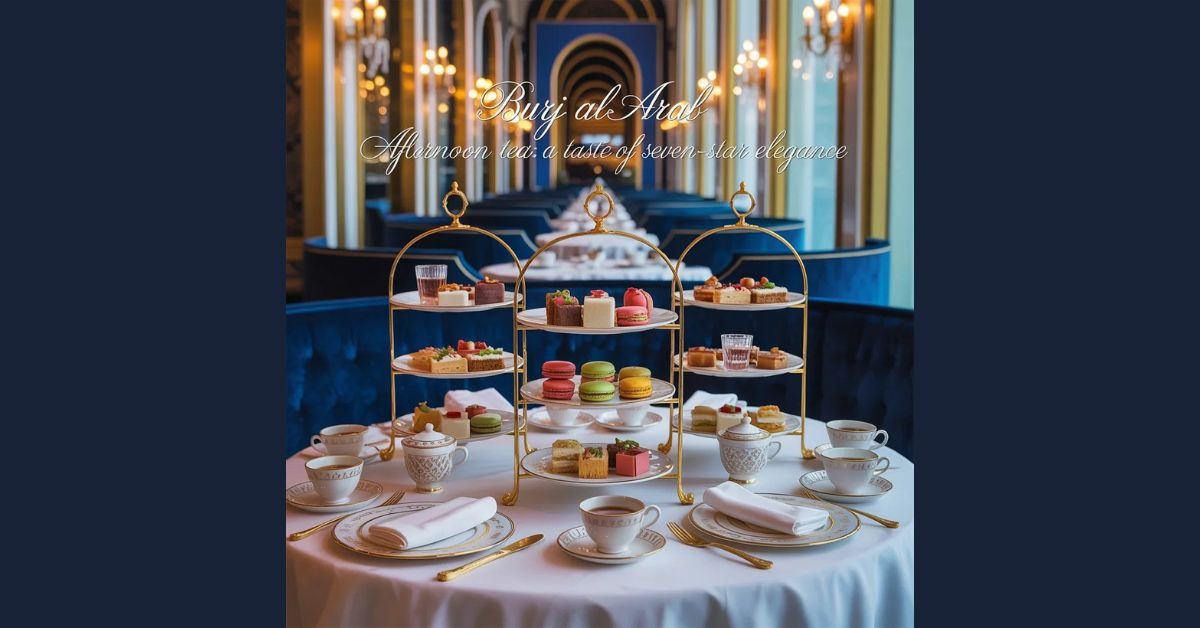
What will make a cup of tea a memorable luxury experience? The legendary afternoon tea at Burj Al Arab is the solution to many tourists and the locals in Dubai. It is a legendary sail-shaped hotel with a hotel that is also known worldwide by redefining the standards provided in the hospitality industry. It provides a well-danced experience where architecture, cuisine, service and a story intertwine. This paper examines what has made Burj Al Arab afternoon tea very unique and how it stands out among the traditions of tea in the world. And why it has remained a favorite among sophisticated guests who desire refinement, exclusivity and indulgent sense of experiences.
The Afternoon Tea in Modern Luxury Global Revival
Afternoon tea has much superiorized its British background. It used to be a social break between lunch and dinner but now is a sign of low luxury, conscious hedonism and curated beauty. Over the past few years, the tradition has been redefined by luxury hotels. All over the world to fit the contemporary needs. Hospitality industry reports of 2024 indicate that experiential dining has become the factor that affects more than 60 percent of upscale hotel bookings. And the most popular rituals that are considered focus perks include afternoon tea. As a city that is associated with innovation and opulence, Dubai has not been left behind of this revival.
The Architectural Stage Which Takes the Experience a Notch Higher
The location of Burj Al Arab is very decisive in influencing its afternoon tea. The interior of the hotel with its 321 meters of height over the Arabian Gulf is an exhibition of towering atriums, gold-leaf outline, and cataclysmic lighting. The guests will use panoramic elevators and reach the lounge, where the sea is infinitely beyond the floor-to-ceiling windows. This architectural pomp is not the extravagance of ornament; it is a calculated phase which is intended to raise the anticipation. And portend exclusiveness right at the very beginning.
A Well Chosen Greetings Ceremony
Luxury has been described based on the feeling that it is giving the guests. And Burj Al Arab knows this very well. Afternoon tea consists of a formal introduction, after which we sit down. And a light introduction to the menu is given. The attitude of the staff is professional and warm at the same time so that the guests are both impressed and relaxed. This is a very vital human factor. Research on luxury service management demonstrates that personalized contact makes the guests feel satisfied by almost 40 percent. Which is obviously evident in the Burj Al Arab strategy.
The Tea Selection: Tradition Meets Global Sourcing
The centre of the experience is tea itself. Afternoon tea menu at Burj Al Arab has a wide choice of rare. And high-quality blends that are found in the famous tea-producing areas. Visitors will find exquisite black teas, smooth green teas, scented herbal teas. And special signature teas which were developed specifically for the hotel. Alongside each tea, there is information about the flavor notes and ways to brew the tea. Which turns a normally common drink into a learning and sensual experience.
Food Artistry in the Savory Course
The savory component of Burj Al Arab afternoon tea proves that the old fashioned technique can exist with modern style. Every product is designed to find a balance and not to be heavy, which enables flavors to develop over time. The chefs also focus on accuracy, contrast of texture and visual balance. So that every bite accompanies teas which are served. This savour to sweet transition is not accidental but rather follows the pattern of traditional afternoon tea and gives it a sophisticated execution.
Pastry Excellence and Role of Visual Luxury
The desserts at Burj Al Arab are not desserts, but works of art that you can eat. Since it is elaborately glazed pastries to carefully stacked cakes. Every item bears the impression of visual opulence by the hotel. Contemporary guests are more and more becoming concerned with presentation. And culinary surveys carried out in 2025 show that more than 70 percent of luxury diners equate aestheticism with perceived quality. Burj Al Arab uses this understanding, making each dessert memorable.
The Atmosphere: In Time Out
The atmosphere of afternoon tea in Burj Al Arab is one of the most incredible. Although the location is in one of the busiest cities in the world, the experience seems to be not hurried. Minimized lights, muted background music, and slow pace of serving drinks persuade clients to hang around. This deliberate slowness of time corresponds with current luxury trends of the luxury whereby being present, being calm and having emotional comfort is considered as important as material grandeur.
Dress code and Social Significance
Afternoon tea at Burj Al Arab is not just a meal, it is a social statement. The elegant dress code enhances the occasion feeling, as it brings the guests to enjoy a common ritual of elegance. This formality is invigorating in an era of digital interaction, in which all interactions are casual. It is also a part of the effective visual presence of the hotel on social platforms where the pictures of afternoon tea experience create millions of impressions every year, supporting its aspirational image.
Cultural Fusion: Arabian Hospitality Meets European Tradition
The advantage of Burj Al Arab over the conventional European tea rooms is that it has been slightly tinted with the Arabian values of hospitality. The act of generosity, attentiveness and respect are incorporated in all interactions. This fusion of cultures makes it more authentic and unlike other afternoon teas in London or Paris. It is a representation of Dubai as a bigger picture of a crossroads, a place where traditions are respected yet never stagnant.
Burj Al Arab Afternoon tea and Global Icons are similar in many ways
Burj Al Arab is distinguished in size, location, and story when compared to other popular afternoon teas in the world. Even though the historic hotels can be dependent on history, Burj Al Arab depend on the innovation and spectacle without losing the refinement. This equilibrium is very attractive to overseas tourists especially those going to Dubai to commemorate a milestone or a once in a lifetime journey.
The Afternoon Tea as a part of the luxury tourism of Dubai
Recent reported tourism statistics showed that Dubai received over 17 million foreign visitors, and the high-end experiences constituted a big part of the expenditure. The afternoon tea at Burj Al Arab acts as a point of entry into ultra-luxury hospitality. It enables the guests to enjoy the legendary service of the hotel without any obligation to stay overnight, thus, being aspiration as well as achievable.
Photography, Recollection and Emotional Values
Memories created are becoming an evaluative factor when it comes to luxury experiences. The afternoon tea at Burj Al Arab is planned with this consideration. Since the moment the guests enter to the last drop of tea, everything is designed in such a way that it becomes unforgettable and snap-on. Consumer psychology studies have indicated that emotional value is more important than material value in the decision making in regards to luxury hence Burj Al Arab has evidently adopted the change.
Why the Experience Appeals to First-Time and Repeat Guests
First-time guests are attracted based on reputation and curiosity, whereas the repeat customers visit the company to get a sense of consistency and attachment. Burj Al Arab upholds a high level of quality to make sure that it is special on each occasion. It is a pillar of brand trust and this is especially true in the luxury hospitality where the expectations are very high.
Environmental friendliness and Contemporary Luxury Demands
The concept of modern luxury is becoming more responsible. Although lavish, Burj Al Arab afternoon tea also demonstrates the wider sustainability initiatives with sourcing, waste minimization and seasonally changing the menu. Such efforts would be in line with evolving guest values, with recent surveys revealing that more than 50 percent of high-end travelers are now basing their experience decisions on sustainability values.
Does Burj Al Arab Afternoon Tea Live to the Hype?
Most people ask themselves before making a booking whether it is a worth the reputation or not. To the question of a person who wants more than merely food, the reply is yes. Here afternoon tea is a multi-sensory experience which is a blend of architecture, food, service, and feeling. It is not the count or rate but the presence, detail as well as narration.
Concluding Remarks: A Ceremony of Contemporary Grace
Burj Al Arab afternoon tea is the transformation of the luxury food in the XXI century. It is traditional but sheds light on innovation to provide guests with a classy respite in an increasingly hectic world. It is one of the most iconic rituals in Dubai whether taken as celebration, cultural or as a personal indulgence. To those who think that luxury cannot be an empty promise, this afternoon tea provides just that.
